arrow up
Ж | Ž
Ж | Ž
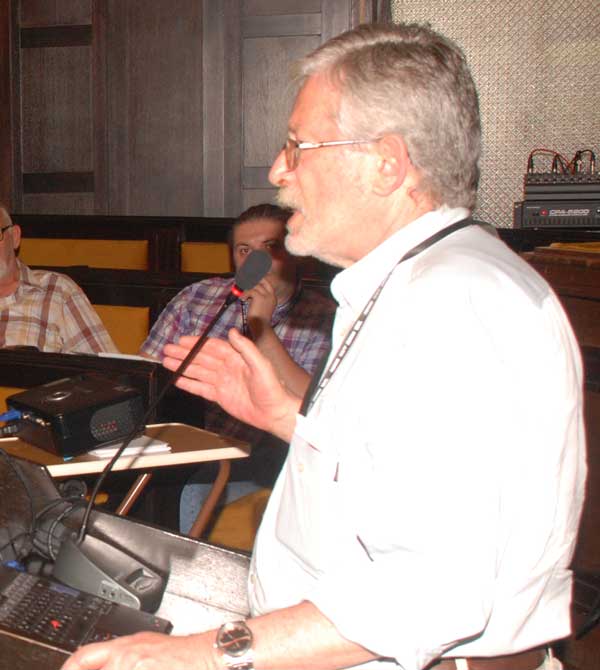
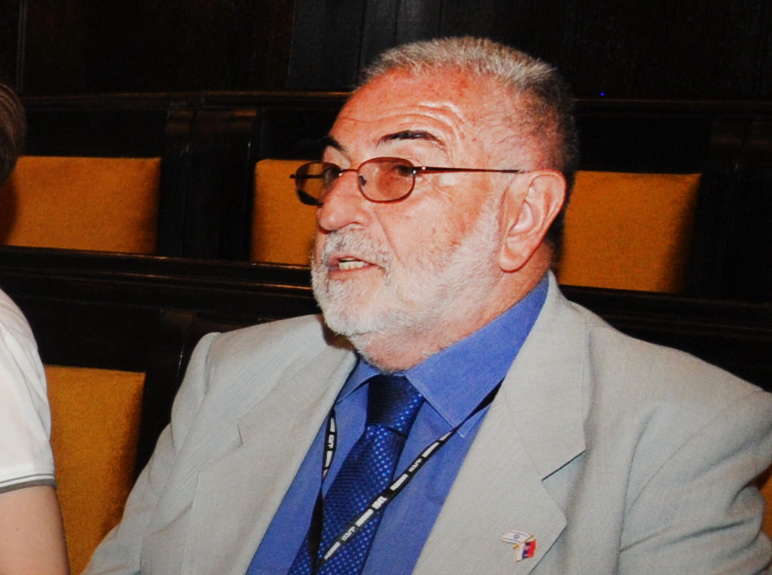
jovan-mirkovic-istoricar.jpg

Jovan Mirković, VICTIMS OF 1941–1945 WAR BORN IN THE REGION OF BOSANSKA KRAJINA ACCORDING TO THE REVISION OF THE 1964 CENSUS WITH SPECIAL EMPHASIS ON THE SUFFERING OF ELDERLY AND THE SUFFERING IN CAMP JADOVNO

Museum of Genocide Victims, Belgrade VICTIMS OF 1941–1945 WAR BORN IN THE REGION OF BOSANSKA KRAJINA ACCORDING TO THE REVISION OF THE 1964 CENSUS WITH SPECIAL EMPHASIS ON THE SUFFERING OF ELDERLY AND THE SUFFERING IN CAMP JADOVNO The area we are covering was 11.23% of the NDH territory and according to the 1931 census it had 659,701 people, 63.39% of them Orthodox Christians, 12.01% Roman Catholic, 23.84% Muslim and 0.76% others. The estimated population in 1941 is 804,835, which is 12.78% of estimated number of people living in the NDH (there was no census in 1941). In this area, deaths of 105,624 people have been recorded, which is 23.16%

Владимир Умељић

Vladimir Umeljić, SOCIAL-PSYCHOLOGICAL ASPECTS OF THE PHENOMENON OF GENOCIDE (IN THE LIGHT OF THE DEFINITIONISM-THEORY)

The International Commission for the Truth on Jasenovac, Mainaschaff SOCIAL-PSYCHOLOGICAL ASPECTS OF THE PHENOMENON OF GENOCIDE (IN THE LIGHT OF THE DEFINITIONISM-THEORY) „Usurpation of the power over definitions with intention to acquire a monopoly over the same, on the part of the centers of political power, embodied in governmental or para-governmental structures is the most efficient instrument of the said centers of political powers, and simultaneously, the engine of both segmentary and total development of the human society. The growth of the political power is, as experience teaches us, directly proportional to the decline in adherence to the ethical imperatives of the human society. Thus the usurpation of power over
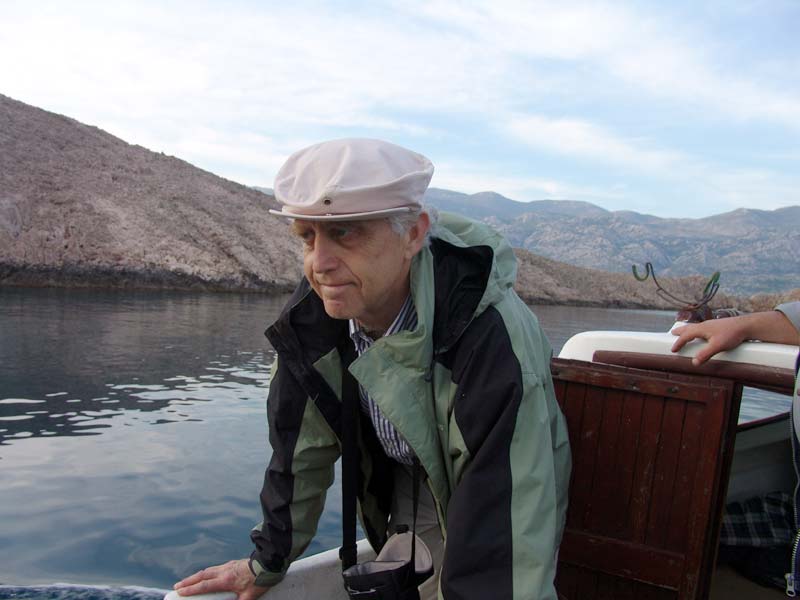
Dani Novak

Dani Novak, A SURVIVING CHILD CAMP INMATE – PERSONAL MEMORY AND TRANSFERRED EXPERIENCE

Ithaca College, New York A SURVIVING CHILD CAMP INMATE – PERSONAL MEMORY AND TRANSFERRED EXPERIENCE This paper is describing a personal of a 62 years old man who lost most of his family in the Holocaust at the hands of Croatians (many died in the Jadovno Complex including Slana and Karlobag). The parents of the only child who lost their loved one immigrated to Israel after the war but never talked about the experience and so the home was filled with a heavy atmosphere of guilt, shame and deep sadness. It was not until November 2005 that an inner calling directed the author to find us what happened.  This was a time

Melita Švob, JEWS KILLED IN JADOVNO

JEWS KILLED IN JADOVNO The Research and Documentation Centre «CENDO» developed a computer database of Holocaust victims in Croatia, which is available on the webpage www.cendo.hr: Općina (Community):______________________________________________________________ Ime ili prezime (Family name, first name):_________________________________________________________ Mjesto rođeenja (Place of birth):__________________________________________________ Godina rođeenja (Year of birth):___________________________________________________ Ime oca (Father’s name):__________________________________________________________ Mjesto stradanja (Place of killing):_________________________________________________ Godina stradanja (Year of death):_________________________________________________ Sudbina (Destiny):________________________________________________________________ We believe that by publishing data on individual victims, we remove any possibility of manipulation and denial of Holocaust. For this Conference we have prepared data from the database for the Jewish Municipality in Zagreb (12,000 names) on Jews who died in Jadovno (300, names) with detailed data. We

Mladenka Ivanković, JADOVNO – “ARYANISATION OF CULTURAL ENVIRONMENT” OF THE INDEPENDENT STATE OF CROATIA

Institute for the Recent History of Serbia, Belgrade JADOVNO – “ARYANISATION OF CULTURAL ENVIRONMENT” OF THE INDEPENDENT STATE OF CROATIA – Jewish intellectuals and student youth as one of first victims of mass executions – The Independent State of Croatia in its origin had roots in rewriting political map of the world in the will of its “mentor”, the Third Reich. In that sense, looking at it historically and legally, the creation of this state was not connected to some particular legal principles, therefore the historiography used to call it a “so-called state”. The NDH was formed on national basis, with special care on the essence of the ideology of

milan_koljanin.jpg

Milan Koljanin, CAMP GOSPIĆ IN CROATIAN NATIONAL AND RACIAL POLICY IN 1941

Institute for Contemporary History, Belgrade CAMP GOSPIĆ IN CROATIAN NATIONAL AND RACIAL POLICY IN 1941 Favourable political and military circumstance after 27 March and aggression of Germany and its allies on the Kingdom of Yugoslavia enabled the Independent State of Croatia to be created and political programmes of extreme Croatian nationalism to be fulfilled. Although formally it was within Italian sphere of interest, the Ustasha state, with its creation and ideological profile was much closer to German Nazi rather than Italian fascist model. The new state structure was established surprisingly quickly because it was founded on the basis of the civil servants of the Croatian Banovina who, after a public

Raphael Israeli, ISLAM IN THE BALKANS UNDER THE GERMAN OCCUPATION

The Hebrew University of Jerusalem ISLAM IN THE BALKANS UNDER THE GERMAN OCCUPATION After the  Nazi occupation of  Poland  and Western Europe in the early stages of WWII, following Hitler’s renouncing of his hope to vanquish Britain, as a result of  America’s entrance into the war, and parallel with the  bogged down Nazi effort on the Russian front  in Stalingrad,  the Nazi strategy shifted from solely relying on their allies in central Europe and the Balkans, to actual occupation of most Mediterranean shores, so as to turn those waters, and the oil resources  around them, into a German lake. For that purpose, the Nazis sent Rommel to North Africa, planning to oust the British from the

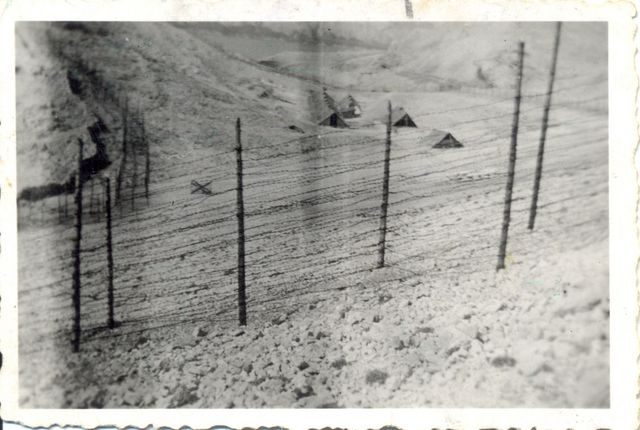
Logor_smrti_NDH_Slana_na_ostrvu_Pag_ljeta_1941.jpg

Filippo Petrucci, ITALIAN OCCUPATION IN TUNISIA AND YUGOSLAVIA: DIFFERENCES AND SIMILITUDE IN THE RELATIONS WITH THE JEWS

University of Cagliari  ITALIAN OCCUPATION IN TUNISIA AND YUGOSLAVIA: DIFFERENCES AND SIMILITUDE IN THE RELATIONS WITH THE JEWS During my studies I have investigated on the role of Jews in the community of Tunisia and Algeria analyzing their activities to understand their position in the colonial society. Tunisia was a world inhabited by Muslim Arabs, but dominated by French, a world in which differences existed between French and Arabs (in their behaviour towards the Jews), but also existed internal differences in the religious groups (Muslims, Christians, and Jews). During my lecture, I would like to emphasize on the impact that Vichy’s racial laws had on Tunisian society, focusing also on

Kiril Feferman

Kiril Feferman, NAZI “DIVIDE ET IMPERA”: COMPARING SOVIET AND YUGOSLAV CASES IN 1941

Russian Holocaust Center, Moscow NAZI “DIVIDE ET IMPERA”: COMPARING SOVIET AND YUGOSLAV CASES IN 1941 This paper seeks to elucidate similarities and dissimilarities between Nazi Germany’s policies vs. Yugoslavia and Soviet Union after these territories fell under German rule. Her policies reflected, to some extent a classical colonial approach of “divide et impera” and involved different treatment of various national groups comprising multinational states. However, the Germans considerably radicalized these policies with regard to non-Jewish population of Yugoslavia and USSR, which came largely as a result of the lifting of restrains on Nazi treatment of civilians and partisans. In both countries, German authorities suppressed the biggest nation (Serbs and Russians). At

Dragan Šućur, SUFFERING OF CLERGY OF THE SERBIAN ORTHODOX CHURCH IN THE SYSTEM OF USTASHA CAMPS JADOVNO-GOSPIĆ IN 1941

Armed Forces of Bosnia and Herzegovina, Banja Luka SUFFERING OF CLERGY OF THE SERBIAN ORTHODOX CHURCH IN THE SYSTEM OF USTASHA CAMPS JADOVNO-GOSPIĆ IN 1941 Based on literature and partial archival materials of the Holy Synod of the Bishops of the Serbian Orthodox Church in Belgrade, the paper describes the suffering of bishops, priests, deacons, monks and students of theological seminaries in the system of Ustasha camps Jadovno-Gospić. On the basis of the above sources, the paper tries to show the real intention the authorities of the Independent State of Croatia had for Orthodox clergy and in turn with Orthodox Serbs. Along with that, it states the number of bishops,

Ексхумациjе и спаљивање ексхумираних лешева у логору Слана на острву Паг у Хрватскоj. Италиjанска фотографиjа из септембра 1941. Јевреjски музеj у Београду.

Mila Mihajlović, ITALIAN SOURCES – DOCUMENTS ON MASSACRE OF SERBS IN DALMATIA, LIKA AND KNINSKA KRAJINA (1941 – 1943)

RAI World, RAI, Rim ITALIAN SOURCES – DOCUMENTS ON MASSACRE OF SERBS IN DALMATIA, LIKA AND KNINSKA KRAJINA (1941 – 1943) The role of Italian Army on the territory of the former Kingdom of Yugoslavia has been unjustly neglected even in the Italian historiography itself. The entry, deployment and actions of 2nd Army in Istria and Dalmatia – ordered and executed on 11 April, 1941 at 12:00pm – deserves more detailed study, because in that sector Italian units found themselves in a complex wartime and political situation unlike history has ever seen. The Italians carefully monitored and recorded the events and by that gave support to many complex historical truths

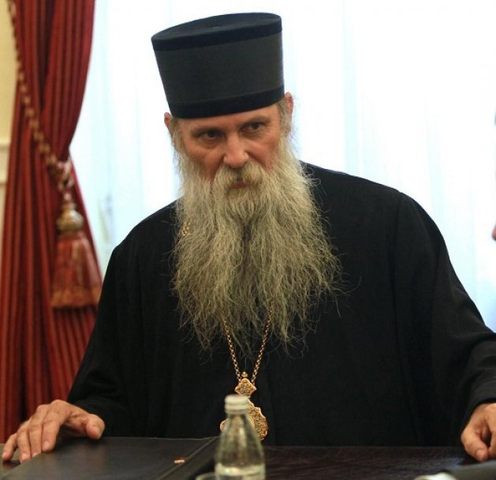
Jovan_Culibrk_003.jpg

Jovan Ćulibrk, MEMOIRS, AUTOBIOGRAPHIES AND BIOGRAPHIES OF MEMBERS OF ALLIED MISSIONS IN OCCUPIED YUGOSLAVIA AS SOURCES OF RESEARCH OF 1941 AND JADOVNO

Jasenovac Board of the Serbian Orthodox Church, Jerusalem MEMOIRS, AUTOBIOGRAPHIES AND BIOGRAPHIES OF MEMBERS OF ALLIED MISSIONS IN OCCUPIED YUGOSLAVIA AS SOURCES OF RESEARCH OF 1941 AND JADOVNO The rich literature of diaries or autobiographical texts of members of Allied missions in the occupied Yugoslavia, as well as their biographies, has almost been unused in terms of research of sufferings in the Second World War in Yugoslavia. Allied missions were present in Yugoslavia already in late 1941 and had the opportunity, whether personally or through testimonies and documents, to witness the terrible suffering of some structures of the Yugoslav population during the war. Because of that their testimonies are invaluable.

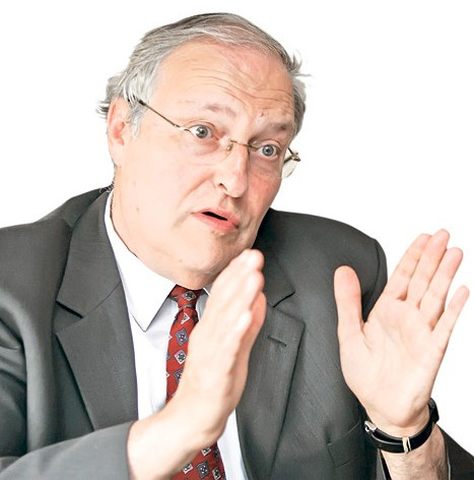
Efraim_Zurof_002.jpg

Efraim Zuroff, IMPORTANCE OF THE POST-HOLOCAUST JUSTICE IN THE EAST EUROPE AFTER THE FALL OF COMMUNISM

Simon Wiesenthal Center, Jerusalem IMPORTANCE OF THE POST-HOLOCAUST JUSTICE IN THE EAST EUROPE AFTER THE FALL OF COMMUNISM The lecture will deal with the significance of prosecuting Nazi war criminals and collaborators in post-Communist Europe. It will describe the unique aspects of the collaboration with the Third Reich in the countries which were part of the Soviet Union or under Communist rule from the end of World War II until 1989, emphasizing the lethal nature of such collaboration, which unlike the situation elsewhere in Europe, included active participation in mass murder. Bringing these war criminals to justice has proven to be one of the most difficult, if not the most difficult, of the six

Logor_smrti_NDH_na_ostrovu_Pag.jpg

Ljiljana Radonić, WAR OF REMEMBERANCE IN POST-YUGOSLAV REGION

University of Vienna WAR OF REMEMBERANCE IN POST-YUGOSLAV REGION Without any doubt we could say that individuals and groups use memories of past for present purposes, they remember only those events that they could fit into their own image of themselves or the group. So already in 1980-ties in (Western) Europe, after decades of suppression, the Holocaust became the focus of memories of the Second World War. The extermination of European Jews is considered to be a common experience from which Europe learned and created new structures in order to prevent something like that from happening in the future. At the same time in Eastern and Southeast Europe the history

Ivan Čerešnješ

Ivan Čerešnješ, MEMORY AS IDEOLOGY IN CHANGING SOCIETIES

The Hebrew University of Jerusalem MEMORY AS IDEOLOGY IN CHANGING SOCIETIES  -„Never again“ as a paradigm for Holocaust Memory – „It is the manipulation of history rather than emotion through architecture of monuments that is troubling. When history is not understood it is more likely to be repeated.“ The modern researchers continuously attempt to bridge between the history and collective memories of the Jews and the non-Jewish communities, coexistent in a common landscape. This is not an easy task, mainly for the fundamental differences between history and memory: whereas history attempts to reconstruct the past on the basis of all the data at hand by means of critical analysis, memory

НАЈНОВИЈЕ ВИЈЕСТИ

Попис
10.502 жртве

Удружење Јадовно 1941. је формирало Централну базу жртава, коју можете претражити уносом појединих података о жртвама.

Календар
Покоља

Одаберите годину или мјесец и претражите све догађаје који су се десили у том периоду.