arrow up
Ж | Ž
Ж | Ž
Slide1.jpg

VICTIMS OF 1941-1945 WAR FROM GRUBIŠNO POLJE MUNICIPALITY by Jovan Mirković

Српски The analysis has been made according to the place of birth and according to the current revision of the “Victims of 1941 – 1945 War” list from 1964. This analysis has been made by the Senior Curator of the Museum of Genocide Victims from Belgrade, Jovan Mirković, and he presented it at the promotion of the book: “Bilogora and Grubišno Polje 1941 – 1911” by Milan Bastašić. The promotion was held in Belgrade on February 10th, 2010 at the Academy for Security and Diplomacy.     Jovan Mirković: A word at the book promotion of: Bilogora and Grubišno Polje 1941 – 1991 by Milan Bastašić (Belgrade, 10th February, 2010,

Šušnjar 1941.

Šušnjar 1941.

Proceedings – papers, testimonies and documents Oštra Luka, 2008. Српски Available in Adobe PDF format: Šušnjar 1941: Proceedings – papers, testimonies and documentsAcrobat PDF file, 3.505kB On 1st August 2008, Oštra Luka was the venue of the ‘Šušnjar 1941’ Round Table, exactly sixty-seven years after the terrible massacre at the hands of the Ustashi on St. Elijah’s Day, when between 7,000 and 10,000 Serbs and Jews of what was then the District of Sanski Most (the exact number has not been ascertained yet, but we should hope it will be within a reasonable period of time) were brutally killed only because they were members of a different religion and a

Застава Русије

ПРЕНОСИМО: РУСИЈА – ЈЕДИНА НАДА СРБИЈЕ – Пише: Милован Балабан

Наjновиjе понижење коjе jе Србиjа доживела после мишљења МСП-а о jедностраном проглашењу косовске независности, представља последњу опомену да српска држава и српско друштво захтеваjу озбиљно преиспитивање. И то како у спољнополитичкоj ориjентациjи, тако и у унутрашњем вредносном систему, коjи jе негован последњих десет година. То jе jасно сваком (сем, изгледа, актуелноj власти и неким политикантима у опозициjи). Преовлађуjућа спољнополитичка ориjентациjа последње децениjе, сажета у догми „Европа нема алтернативу“ (коjа све више значи да Америка и НАТО немаjу алтернативу), показала се као погрешна и потпуно jалова. Српска држава у будућности мора да води рационалниjу политику у коjоj ће бити места за истинску сарадњу са свим великим силама, а поготово са Русиjом.

srpska_mreza_234x60.gif

10th Assembly of Serbian Orthodox Youth and Future held in Belgrade from 6th to 8th August, as well as 4th Assembly of Serbian Network

Српски With blessings of His Holiness Serbian Patriarch G.G. Irinej, organised by the Serbian Assembly Dveri, the 10th Assembly of Serbian Orthodox Youth and Future was held in Belgrade from 6th to 8th August, as well as the 4th Assembly of the Serbian Network, at this moment the only and unique association in the world that gathers several dozens of various non-party Serbian patriotic associations from all Serbian countries and the Diaspora. Over 100 participants and 30 organisations from Serbia, Republika Srpska, Montenegro, former Yugoslav states, as well as from the European, American, Canadian, Australian and New Zealand Serbian Diaspora were present at this year’s jubilee Assembly. The main topic

Glinska-crkva-5.jpg

Talking about the Ustasha concentration camp Jadovno in Croatian Home built on foundations of Serbian Orthodox Church in Glina

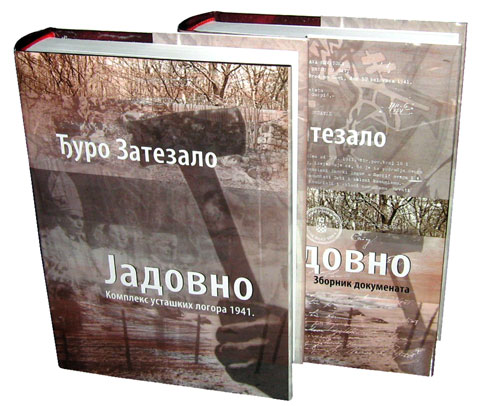
Српски The two books were presented to the public of the town of Glina, Croatia on June 26, 2010: „Jadovno, Complex of Ustasha Concentration camps in1941“, by Djuro Zatezalo, and „Jadovno-Collection of documents“, edited and published by the Genocide Museum of Kragujevac. This event was organized by common action of Serbian Cultural Society „Prosvjeta“, and Serbian National Minority Council of Glina town in Croatia. The main speakers on Zatezalo’s book were Vesna Čulinović-Konstantinović – president of the Alliance of antifascist fighters and antifascists of Croatia (SABAH), Svetozar Livada – sociologist, and the author himself. Z Zatezalo, who worked as director of Historical Archives of Karlovac for 30 years, got a

РТРС – ОЛУЈНО НЕВРИЈЕМЕ

РТРС – ОЛУЈНО НЕВРИЈЕМЕ Документарни филм аутор Недељко Лаjшић уредник документарног програма Игор Пожгаj прозводња РТРС август 2010. године

Прилози – слике

Евица Басташић (ауторова мајка) за таром Народна ношња у западној Славонији Стево Басташић, шегрт на пекарском занату у Старом Бечеју, са пријатељем Николићем (брицом) Слагање жита у гран’це „Машинање“ жита Обиљежавање годишњице пробоја логораша, Градина 26. април 2009. Преживјели свједоче, Милан Басташић на Градини 26. априла 2009.   < „Грубишнопољски лист“, бр. 88, од 30. априла 1991. године                            Садржај                               Поговор >  

crkva.jpg

Tragedy of village Tribanj Šibuljine

Old man Pavle Babac, whom we mentioned before and who studied the tragedy under Velebit, gives us a couple of very shocking pages regarding the destruction his fellow villagers from the Tribanj Šibuljine area. Late Babac collected all testimonies in a book named “Slopes of Velebit, 1941 – 1945”, published in Belgrade in 1965. Here we will use parts of his book in order to inform the reader about the misfortune of poor inhabitants of these villages who were mostly taken and executed in Slana. I knew uncle Pavle as a responsible man weighing every word, and in this book I can see how he checked each sentence for hundreds

k-01.jpg

Charon and Destinies

Srpski Ante Zemljar: Charon and Destinies USTASHI DEATH CAMPS SLANA AND METAJNA AT THE ISLE OF PAG, CROATIA -1941.. Charon and Destinies is a horrendous story about Ustashi death camps Slana and Metajna on the Isle of Pag, Croatia. Ustashi camps were established at the beginning of June and closed nearing the end of August 1941. Vividly depicted are beastly tortures committed by Ustashi, whose monstrosity surpassed vicious mediaeval inquisition tortures. Names and events are authentic. Those are testimonies of eye-witnesses, rare living survivors, and court witnessing of imprisoned Ustashi. Slana and Metajna, surrounded by Adriatic sea, are places of unthinkable terror, bestialities committed by monster-people-places of suffer of thousands

ante_zemljar.jpg

About the Author

Biography: ANTE ZEMLJAR was born in Pag 1922. He was a member of the People’s Liberation Struggle – NOB from 1941 as a resistance fighter, political activist and an officer. From 1949 to 1953 he went through torture on Goli Otok as a political prisoner. He finished the primary and secondary school in Pag and Šibenik, and in Zagreb he graduated comparative literature at the Faculty of Philosophy. He published a dozen of books. In literature Ante Zemljar proved himself as a poet, storyteller, travel writer, novelist, critic and a scriptwriter. He cooperated with almost all relevant literary magazines and he also wrote radio comedies and film scripts. He was

Биографија: Анте Земљар

АНТЕ ЗЕМЉАР је рођен у Пагу 1922. године. Судионик је НОБ-а од 1941. као илегалац, политички радник и официр. Од 1949. до 1953. као политички затвореник прошао је тортуру на Голом отоку. Основно и средњошколско образовање стекао је у Пагу и Шибенику, а у Загребу је дипломирао компаративу књижевност на Филозофском факултету. Објавио је десетак књига. Анте Земљар се у књижевности огледао као пјесник, приповједач, путописац, романописац, критичар и сценариста. Сурађивао је у готово свим релевантним књижевним часописима, а писао је и радиокомедије те филмске сценарије. Посебно се истакао тзв. оточном књижевности, описавши у неколико књига поднебље и људе из којега је потекао – Хрватско приморје и кварнерске отоке. Објавио

Stevan-Ciric.jpg

PRVE ŽRTVE USTAŠKOG TERORA I GENOCIDA U SREMSKIM KARLOVCIMA, HAPŠENJE ISTAKNUTIH GRAĐANA JUNA 1941. GODINE I NJIHOVO STRADANJE U LOGORU JADOVNO

Ћирилица Položaj Srba u NDH se sve više pogoršavao, kao i položaj Jevreja i Cigana, posle objavljivanja „Zakonske odredbe o rasnoj pripadnosti“ i „Zakonske odredbe o zaštiti arijevske krvi i časti hrvatskog naroda“ početkom maja 1941. godine u glasilu hrvatskog ustaškog pokreta (Hrvatski narod, broj 78 od 1. V 1941. godine). Te odredbe je propisao poglavnik NDH Ante Pavelić po nemačkom nacističkom uzoru. Mržnju protiv Srba, Jevreja i Cigana uporno je širila ustaška propaganda preko dnevne štampe, radija i na skupovima. Oni su okrivljivani za sva postojeća zla i označavani kao niže rase i „nepoćudni elementi“. Srbi su još nazivani četnicima, a srpska pravoslavna vera grčko-istočnom ili šizmatičkom. Ustaška štampa

Zločin kao program

Svaka i najmanja točka dogovora koju je dodirnula ova dična grupica nadošlih i domaćih ustaša, zasnovana je na kriminalu: oni su svijesni bezakonja na osnovu kojeg će se hapsiti ljudi za dovod u Slanu; svijesnu su teškoća puta po kojem će biti vođeni preko Velebita; vrlo su dobro znali da njihove tek stvorene organizacije nemaju transprotnih sredstava za prebacivanje nego da će ih vezane u kolonama voditi od Gospića do Karlobaga pješice; složili su se da će ih ovdje, u Karlobagu, trpati u male, neudobne brodice, jer su jednio takve brodice postojale po okolnim lukama i bile na dohvatu da ih uposle; znali su, jer su otočani, da će prognanike

НАЈНОВИЈЕ ВИЈЕСТИ

Сваки човек је краљ

Састанак Трилатералне комисиjе у Београду распламсао jе приче о таjним владарима света.

Теорија завере

Епилог инцидента на утакмици Србиjа-Албаниjа jе очекиван. Српска репрезентациjа jе награђена, па

Попис
10.502 жртве

Удружење Јадовно 1941. је формирало Централну базу жртава, коју можете претражити уносом појединих података о жртвама.

Календар
Покоља

Одаберите годину или мјесец и претражите све догађаје који су се десили у том периоду.