

 Serbian
 Armenian
 Croatian
 Dutch
Dutch English
 French
 German
 Greek
Greek Hebrew
 Hungarian
 Italian
 Norwegian
 Polish
 Russian
 Slovenian
 Spanish
A leaked draft of legislation on setting up a new state body to commemorate Holocaust victims in Serbia has been criticised for allegedly glossing over the role played by Belgrade’s Nazi-allied WWII https://jadovno.com/wp-content/uploads/2010/02/13-1.jpgistration.
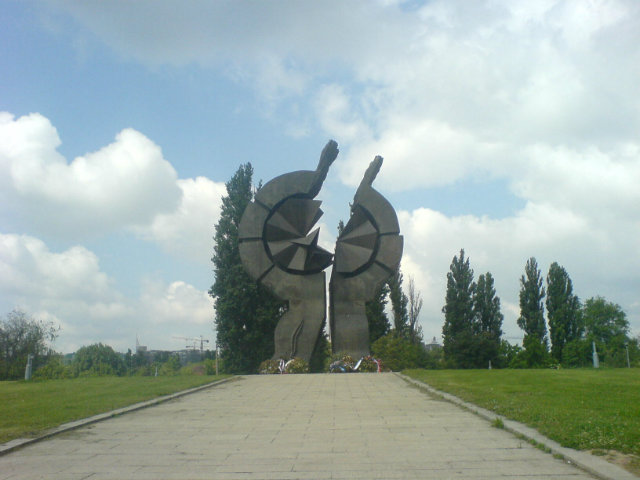
A leaked draft of proposed new legislation on the commemoration of the Holocaust in Serbia has attracted criticism from activists who claim it’s an attempt to rewrite history – although officials have responded that this is not the final version of the law.
Rights groups allege that the draft text ignores the role played by the Serbian Nazi-allied https://jadovno.com/wp-content/uploads/2010/02/13-1.jpgistration in arresting Jews who were then sent to the Judenlager Semlin concentration camp in Belgrade.
Some 7,000 Jews died at the camp in 1941 and 1942, which was located at the Staro Sajmiste (Old Trade Fair) site.
The proposed new state institution is intended to have responsibility for the Staro Sajmiste site and Belgrade’s Museum of Genocide Victims. It will also be responsible for proposed museums commemorating the Holocaust and Porajmos, the genocide of Roma people during WWII.
The Helsinki Committee for Human Rights said the leaked version of the draft law is historically inaccurate and does not mention the Nazis’ allies in Belgrade.
“It is not in accordance with historical facts, in that it relativises the suffering of the Jewish community during the World War II, because it is not stated that they were the primary victims and that the camp was set up as an attempt to destroy the Jewish community in Serbia,” Izabela Kisic, the executive director of the Helsinki Committee, told BIRN.
Kisic said the draft omits the fact that the camp was managed by Nazi Germany until 1944, and does not mention the role of the Nazis’ allies – the Serbian wartime government led by Milan Nedic, whose police arrested the Jews and handed them to the occupiers.
“It is also silent about the anti-Jewish and racist regulations of Nedic’s government, which was also a function of the Holocaust,” she said.
However a commission involved in proposals for the Staro Sajmiste site expressed regret last month that a “working version of the text of the law” had become the subject of public criticism.
Efraim Zuroff, the director of the Simon Wiesenthal Centre’s Israel and Eastern Europe office, who is also head of the international advisory body for the Staro Sajmiste memorial, also cautioned that the details published in the media so far are not the final version of the law.
“The criticism was premature, because the bill wasn’t ready and the final draft wasn’t prepared. The final draft will impute the concerns of Jewish and Roma people,” Zuroff old BIRN.
The Ministry of Labour, Employment and Social Issues, which is responsible for the legislation, did not respond to BIRN’s questions about the draft law.
But minister Aleksandar Vulin has told media that a memorial complex will be built at Staro Sajmiste, as the authorities have repeatedly promised for several years.
Meanwhile the coordinator of the working group for Staro Sajmiste at the Alliance of Jewish Communities of Serbia, Haris Dajc, said that its own proposals for a Holocaust museum at the site should be taken into account.
“We are very sorry that nobody from the Jewish community was contacted during the drafting of the law,” Dajc told BIRN.
(Maja Zivanovic)
Izvor: BALKAN TRANSITIONAL JUSTICE


