
arrow up
Ж | Ž
Ж | Ž

Đuro Savatić

I was born on 6 May in 1927, Starčevica, Banja Luka. He says: Father Teodor, born in 1902; mother Cvijeta, maiden surname Zubović, born in 1907. (Father died in 1961 and mother in 1994). Father Teodor was a worker of the tobacco factory in Banja Luka. Mother was a housewife. We had a constructed house of 140 square metres surface. The stable was of 150 square metres surface. It had the partitions that were used for the settlement of the cows, horses ans sheep. We possessed barn, pigsty, kosana? and chicken coop too. The cattle consisted of: a horse, two cows, ten sheep, two pigs and 20 hens. Our household
Tomo Lučić

He was born on 1 March 1931 in the village of Bistrica, Žepče County. He says: My parents’ names were: Lučić (Tomo) Pero (1910), a worker and Aleksić Bosiljka, a housewife, born in Brezovim Danama. My father lived in a common household with tha uncle Dušan, who was born in 1911 and worked as a clerk in Žepče district. The parents lived in the common household with the grandmother Lučić Vasilija, who was a widow of a killed Lučić Tomo. He was an ex farmer from the village of Bistrica, the regional unit of Drina (ruled by the a ban). Since I am the oldest grandchild, I was named after

Stojan Stojaković

Banja Luka He testifies: I was born on 15 November 1929 in the village of Slabinja in Bosanska Dubica County. The names of my parents were Milos (father) and Milica (mother). I was named by the grandfather Stojan who died few months before I was born. The village of Slabinja was one of the biggest and most developed villages in that region, i e in the region of counties: Prijedor, Bosanski Novi, Kostajnica, Dubica and the mountain of Kozara. The village consisted of four hamlets: Rakovača, Iškovac, Čapaja and Strijić. There was a primary school in the village. It was consisted of a few hundreds of pupils. The pupils from

Zorka Delić-Skiba

She was born in 1937 in the village of Kruhari, Sanski Most County She testifies: I was born on 27 January 1937 in the village of Kruhari in the vicinity of Sanski Most. I was named Zorka. My surname is Delić. When I was adopted in Zagreb, I was named Zorica – Marija Dasović. One time I didn’t know the date of my birth. I was told I was born on 10 April. It was the date and day when the Independent State of Croatia was established. It is interesting how I was “changing“ the religion. I was born as a Serb of the Orthodox religion. In the process of

Gojko Lovrić

He was born in 1934 in the village of Klekovci, Bosanska Dubica County, a high school teacher. He testifies: I am writing this truthful and sad story in order to reveal the truth regarding to the sufferings of the members of my household in the World War II. I don’t want to compete with those who cares for the glorifying of the numbers of their victims. I felt that I, as the only survivor, had the moral obligation to tell how and in which way my dearest lost their lives. The members of my family were: mother Stanka, father Spasoje; brothers: Miloš, Mihajlo, Sreten, Rajko, Mirko, Boško, Uroš and Stanko;

Svetozar Rubin

He was born on 20 July 1940 in the village of Gornja Omarska, Prijedor County. He testifies: My father Pantelija and mother Jovanka were farmers. They had a shop of the mixed goods. We lived in a pretty big house. We were living in one part of the house, while the other one was used as the shop. We had other outbuilding as other peasants did. We used to have a lot of neat cattle and sheep and goats. We had two pairs of horses which we used for transportation of goods from Prijedor (the goods which my parents used to sell in their shop). Our household consisted of: father

Jovo Šarović

Prijedor, Aerodromsko settlement He testifies: I was born on 7 January 1937 in the vicinity of the town of Foča. Foča was the interest zone of Italy since 1941. However, while the negotioations around the division of this part of B&H, the Independent State of Croatia considered that Bosnia the river of Drina belonged to Croatia. The Croatian military units came to East Bosnia, i e Foca, and conducted the collecting of the Serbs from Foča, driving them to Croatia in the freighted cars. I was in one of the freighted cars. I remember the railway station in Foča and the minutes when I heard the scream and moan of

Rade Gavrilović

He was born on 10 May 1933 in the village of Kadin Jelovac, Dubica County. He testifies: My parents were farmers. Our household was consisted of: father Teodor, mother Milka, both born in 1888; sister Mileva, born in 1925; brother Milan, born in 1927; Rade, born in 1933; Anđa, born in 1935; and Draginja, born in 1937. There were four children who died before the war As far as the property was concerned we used to have: a house, a stable, a corn crib and few small outbuildings. The cattle was consisted of: two oxen, a cow and a calf, one-year old heifer, then three pigs and a lot of

Dobrila Kukolj

Banja Luka She testifies: I was born in one of the most beautiful villages, which is located on the Sava River bank. The name of that village is Međeđa. It belongs to the municipality of Bosanska Dubica. I was born on 30 July 1932. My parent’s names are Rade (father) and Savka (mother – her maiden surname is Ružičić). The mother was a housewife, and the father was both a tradesman and a farmer. I was born in a great house that was consisted of the ground and upper floor. It was long 14 metres, and wide 10 metres. The house had balconies decorated by curving. The upper floor consisted

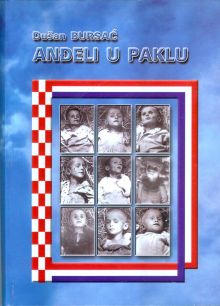
Anđeli u paklu

Dušan Bursać: ANGELS IN HELL

Srpski Autor: Dušan Bursać Published by: Association of World War II former concentration camp Prisoners and their descendants RS, Banja luka 2006 Tracing for the real and not conspicuous title for this book I faced a few problems, because I’ve been told that the title of my published book “Croatian genocide over the Serbs“, that happened in 1941 and lasted to 1945, was provocative and some bookstores didn’t want to put it in their store windows being afraid of the unwanted consequences. That is another proof how much the idea of “brotherhood and unity“ among the Serbs and Croatians is rooted in the consciousness of the people. Then, the associating

REVIEWS

THE WITNESSES OF HELL t came the end of silence about the sufferings of the Serbs. In the context of changed historical circum stances and in accordance with the direction of new winds, many truths, including the truth about the sufferings in the concentration camps in the Independent State of Crotia, are becoming known more and more. Though, it lates much, it is never too late for the truth People have been always leaving the testimonies about their lives and the happenings, which indirect or direct, active or passive partcipiants they were. Dušan Bursać, who contradicted to the changing of the truth, gathered a few testimonies and put them between

SUMMARY

Regardless the possible reactions on this book, the author ascertains a tragic fact that the “brothers“ Croatians caused the greatest evils to the Serns in their whole history. The Croats surpassed the other Serbian enemies together in that:   Turkey, which ruled the Serbian countries almost five centuries after the defeat of the Serbian Army in Kosovo in 1389;   Austria-Hungary, which got the mandate to occupy Bosnia and Herzegovina on Berlin Congress in 1878, and to anexate it in1908. This state performed an aggression on Serbia and Montenegro in 1914, which caused the beginning of the World War I. The Serbs used to have 1.250.000 victims during the aggressive

P5160043.jpg

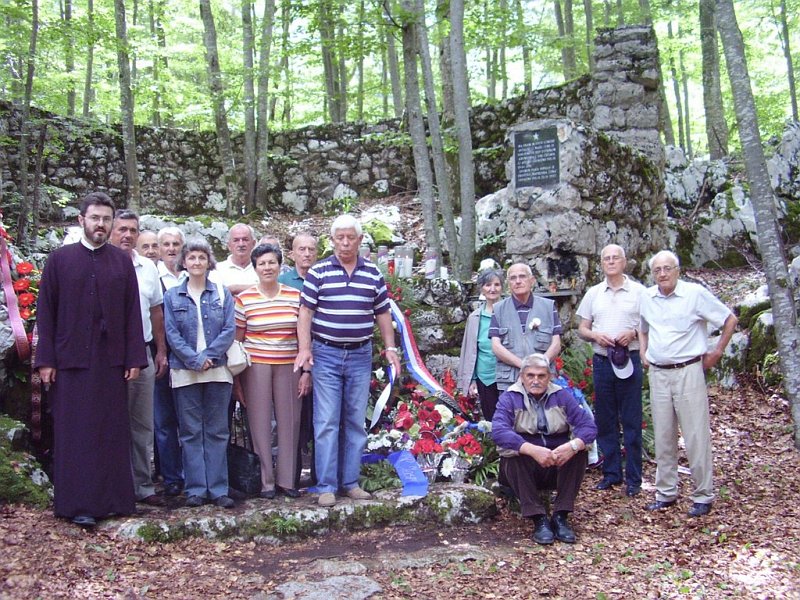
Potomci žrtava iz Mostara u Jadovnu – Dan sjećanja na Jadovno 1941.

Parastosu i polaganju vjenaca kod Šaranove jame, na planini Velebit kod Gospića 26. juna 2010 godine su prisustvovali mnogobrojni potomci i poštovaoci jadovinskih žrtava iz Hrvatske, Srbije, Republike Srpske -Bosne i Hercegovine, Crne Gore i šire. Među njima se sabraše i nekolicina potomaka žrtava iz Mostara grada uz pomoć u organizaciji Srpske pravoslavne crkvene opštine mostarske. Sa sigurnošću se zna za više od dvjesta odvedenih Srba iz Mostara da su svoje ovozemaljske živote skončali u ovom zloglasnom logoru, a pretpostavlja se da ih je više od trista pedeset, jer mnogi ni dan danas sa sigurnošću ne znaju gdje to nestaše grane sa njihovih porodičnih stabala… Parastos jadovinskim žrtvama služio je

TESTIMONIES AND NARRATIONS

The testimonies of the children, who are over sixties now and were forcefully driven away to the Croatian concentration camps, are telling that the Croatian concentration camps were not any kind of working camps (some Croatian authors want to present them such), and that the Serbian children weren’t being saved from them. It can be concluded that those concentration camps were the general places of torture for all those who were brought to the concentration camps by force in order to be tortured in the cruelest way and then killed with the various sharp and hard subject or slaughtered with the knives. The life of these children was spent in

RESPONSIBILITY FOR THE GENOCIDE

There were both tendency and practice for some of the Serbian children to be raised in the Croatian spirit and put on the Croatian military uniforms that were being sewn for them. The children’s camps for such purposes were founded. Ljubo Miloš says this about such camp in Gornja Rijeka at trial hearing: “I cannot tell you precisely when this concentration camp was organized, but I cerainly consider it was in the early spring of 1942. It seems that the idea for the establishment of this concentration camp was given by Didi Kvaternik, and the goal of this concentration camp was to raise small Serbian children who had no parents

NAJNOVIJE VIJESTI

Popis
10.502 žrtve

Udruženje Jadovno 1941. je formiralo Centralnu bazu žrtava, koju možete pretražiti unosom pojedinih podataka o žrtvama.

Kalendar
Pokolja

Odaberite godinu ili mjesec i pretražite sve događaje koji su se desili u tom periodu.