

 Serbian
 Armenian
 Croatian
 Dutch
Dutch English
 French
 German
 Greek
Greek Hebrew
 Hungarian
 Italian
 Norwegian
 Polish
 Russian
 Slovenian
 Spanish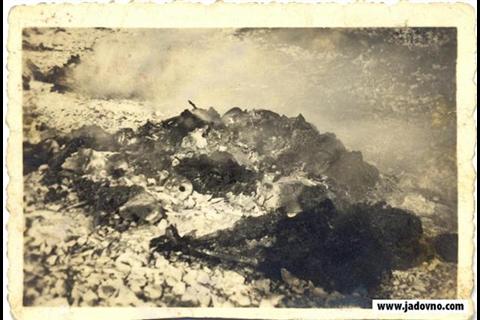
Seventy-seven years ago today, Ustashas committed mass executions of the remaining inmates in the camps Slana on the island of Pag and Jadovno on Mt Velebit.Head of the Association Jadovno 1941 Dusan Bastasic recalls that the at least 791 people were killed in Pag and 1,500 in Velebit.
“Appalled by the monstrosity of the crimes and the number of killed inmates, Italian occupation forces took over from the NDH (Independent State of Croatia) the civil and military power and ordered the closing of death camps,” Bastasic recounts for Srna.
Another reason for Italians’ concern was the massive uprising of Serbs in Lika against the Ustasha tyranny.
“In an effort to destroy the traces of the crime and kill the remaining inmates in a short interval, Ustasha commanders motivated the executioners offering them additional 100 kunas per hour of slaughter. In the night preceding the Catholic holiday of Great Lady Mary, the criminals slaughtered the remaining inmates, men, women and children in the bay of Slana on the island of Pag,” recalls Bastasic.
He says that the following morning of August 15, the Ustasha criminals finished their bloody feast whereupon they joined, drunk and wearing blood-stained uniforms, the procession that was moving through the streets of Pag and ended their walk in the Catholic church in the town center.
“During the same time, Ustashas in the camp Jadovno on Mt Velebit shot with machine guns some 1,500 remaining inmates and threw them in the pits dug out inside the camp,” says Bastasic.
He adds that Italian military medical staff in Pag exhumed and cremated 791 “freshly buried bodies,” as they wrote. The victims included 407 men, 293 women and 91 children. Their ashes were laid to rest in the rocky ground of Pag.
Today the island of Pag does not have a monument at the site of the former camp, which would stand as a reminder of the horrific fate that struck at least 8,020 people, innocent victims – Serbs and Jews – killed in the summer of 1941.
The memorial plaque in the bay of Slana, which was rehabilitated three years ago, was broken two days later, while the one installed last year was destroyed ten days later and has not been repaired to the present day.
In the 1990s war, the memorial that was standing at the site of the Jadovno camp was destroyed, while the bodies of the victims still lie in the ground unexhumed. Two years ago, descendants of the victims put up and desecrated the Holy Cross in the place of the former camp.
“Today, 77 years later, almost no one can recall the slaughter that occurred on August 15, 1941 at Velebit and Pag. But we should, for the sake of our ancestors, our dignity and our descendants. Of the numerous descendants, only a few are keeping the memory of the victims alive,” says Bastasic.
Source: 
Connected news:
BRISANjE TRAGOVA HRVATSKE MRAČNE PROŠLOSTI
VEČERNjE NOVOSTI: Položeni venci nevinim žrtvama Jadovna
Dušan Bastašić – I Slana je Jadovno
BANJALUKA, August 15 /SRNA/ – Seventy-three years ago today, Ustashas committed mass executions of the remaining inmates in the camps Slana on the island of Pag and Jadovno on Mt Velebit.Head of the Association Jadovno 1941 Dusan Bastasic recalls that the at least 791 people were killed in Pag and 1,500 in Velebit.“Appalled by the monstrosity of the crimes and the number of killed inmates, Italian occupation forces took over from the NDH (Independent State of Croatia) the civil and military power and ordered the closing of death camps,” Bastasic recounts for Srna.
Another reason for Italians’ concern was the massive uprising of Serbs in Lika against the Ustasha tyranny.
“In an effort to destroy the traces of the crime and kill the remaining inmates in a short interval, Ustasha commanders motivated the executioners offering them additional 100 kunas per hour of slaughter. In the night preceding the Catholic holiday of Great Lady Mary, the criminals slaughtered the remaining inmates, men, women and children in the bay of Slana on the island of Pag,” recalls Bastasic.
He says that the following morning of August 15, the Ustasha criminals finished their bloody feast whereupon they joined, drunk and wearing blood-stained uniforms, the procession that was moving through the streets of Pag and ended their walk in the Catholic church in the town center.
“During the same time, Ustashas in the camp Jadovno on Mt Velebit shot with machine guns some 1,500 remaining inmates and threw them in the pits dug out inside the camp,” says Bastasic.
He adds that Italian military medical staff in Pag exhumed and cremated 791 “freshly buried bodies,” as they wrote. The victims included 407 men, 293 women and 91 children. Their ashes were laid to rest in the rocky ground of Pag.
Today the island of Pag does not have a monument at the site of the former camp, which would stand as a reminder of the horrific fate that struck at least 8,020 people, innocent victims – Serbs and Jews – killed in the summer of 1941.
The memorial plaque in the bay of Slana, which was rehabilitated three years ago, was broken two days later, while the one installed last year was destroyed ten days later and has not been repaired to the present day.
In the 1990s war, the memorial that was standing at the site of the Jadovno camp was destroyed, while the bodies of the victims still lie in the ground unexhumed. Two years ago, descendants of the victims put up and desecrated the Holy Cross in the place of the former camp.
“Today, 73 years later, almost no one can recall the slaughter that occurred on August 15, 1941 at Velebit and Pag. But we should, for the sake of our ancestors, our dignity and our descendants. Of the numerous descendants, only a few are keeping the memory of the victims alive,” says Bastasic.


