arrow up
Ж | Ž
Ж | Ž

Rade Gavrilović

He was born on 10 May 1933 in the village of Kadin Jelovac, Dubica County. He testifies: My parents were farmers. Our household was consisted of: father Teodor, mother Milka, both born in 1888; sister Mileva, born in 1925; brother Milan, born in 1927; Rade, born in 1933; Anđa, born in 1935; and Draginja, born in 1937. There were four children who died before the war As far as the property was concerned we used to have: a house, a stable, a corn crib and few small outbuildings. The cattle was consisted of: two oxen, a cow and a calf, one-year old heifer, then three pigs and a lot of
Dobrila Kukolj

Banja Luka She testifies: I was born in one of the most beautiful villages, which is located on the Sava River bank. The name of that village is Međeđa. It belongs to the municipality of Bosanska Dubica. I was born on 30 July 1932. My parent’s names are Rade (father) and Savka (mother – her maiden surname is Ružičić). The mother was a housewife, and the father was both a tradesman and a farmer. I was born in a great house that was consisted of the ground and upper floor. It was long 14 metres, and wide 10 metres. The house had balconies decorated by curving. The upper floor consisted

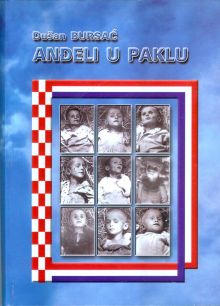
Anđeli u paklu

Dušan Bursać: ANGELS IN HELL

Srpski Autor: Dušan Bursać Published by: Association of World War II former concentration camp Prisoners and their descendants RS, Banja luka 2006 Tracing for the real and not conspicuous title for this book I faced a few problems, because I’ve been told that the title of my published book “Croatian genocide over the Serbs“, that happened in 1941 and lasted to 1945, was provocative and some bookstores didn’t want to put it in their store windows being afraid of the unwanted consequences. That is another proof how much the idea of “brotherhood and unity“ among the Serbs and Croatians is rooted in the consciousness of the people. Then, the associating

REVIEWS

THE WITNESSES OF HELL t came the end of silence about the sufferings of the Serbs. In the context of changed historical circum stances and in accordance with the direction of new winds, many truths, including the truth about the sufferings in the concentration camps in the Independent State of Crotia, are becoming known more and more. Though, it lates much, it is never too late for the truth People have been always leaving the testimonies about their lives and the happenings, which indirect or direct, active or passive partcipiants they were. Dušan Bursać, who contradicted to the changing of the truth, gathered a few testimonies and put them between

SUMMARY

Regardless the possible reactions on this book, the author ascertains a tragic fact that the “brothers“ Croatians caused the greatest evils to the Serns in their whole history. The Croats surpassed the other Serbian enemies together in that:   Turkey, which ruled the Serbian countries almost five centuries after the defeat of the Serbian Army in Kosovo in 1389;   Austria-Hungary, which got the mandate to occupy Bosnia and Herzegovina on Berlin Congress in 1878, and to anexate it in1908. This state performed an aggression on Serbia and Montenegro in 1914, which caused the beginning of the World War I. The Serbs used to have 1.250.000 victims during the aggressive

P5160043.jpg

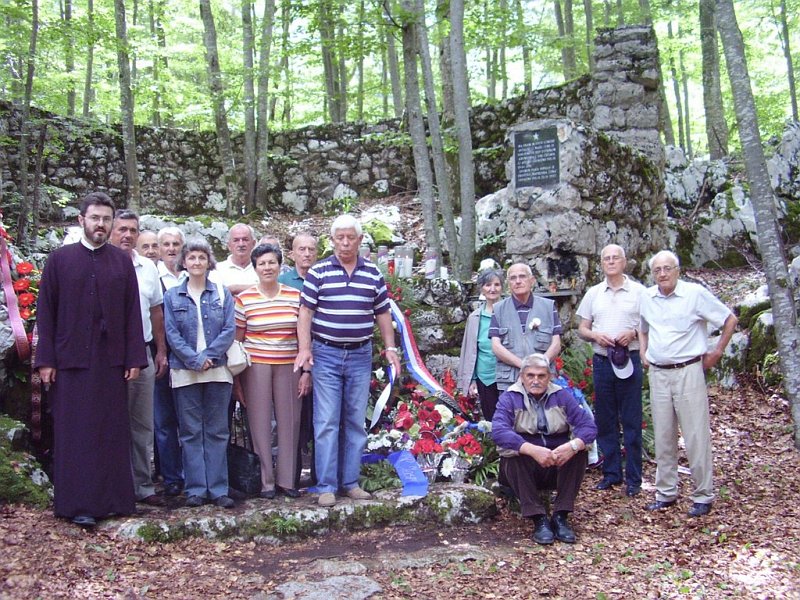
Potomci žrtava iz Mostara u Jadovnu – Dan sjećanja na Jadovno 1941.

Parastosu i polaganju vjenaca kod Šaranove jame, na planini Velebit kod Gospića 26. juna 2010 godine su prisustvovali mnogobrojni potomci i poštovaoci jadovinskih žrtava iz Hrvatske, Srbije, Republike Srpske -Bosne i Hercegovine, Crne Gore i šire. Među njima se sabraše i nekolicina potomaka žrtava iz Mostara grada uz pomoć u organizaciji Srpske pravoslavne crkvene opštine mostarske. Sa sigurnošću se zna za više od dvjesta odvedenih Srba iz Mostara da su svoje ovozemaljske živote skončali u ovom zloglasnom logoru, a pretpostavlja se da ih je više od trista pedeset, jer mnogi ni dan danas sa sigurnošću ne znaju gdje to nestaše grane sa njihovih porodičnih stabala… Parastos jadovinskim žrtvama služio je

TESTIMONIES AND NARRATIONS

The testimonies of the children, who are over sixties now and were forcefully driven away to the Croatian concentration camps, are telling that the Croatian concentration camps were not any kind of working camps (some Croatian authors want to present them such), and that the Serbian children weren’t being saved from them. It can be concluded that those concentration camps were the general places of torture for all those who were brought to the concentration camps by force in order to be tortured in the cruelest way and then killed with the various sharp and hard subject or slaughtered with the knives. The life of these children was spent in

RESPONSIBILITY FOR THE GENOCIDE

There were both tendency and practice for some of the Serbian children to be raised in the Croatian spirit and put on the Croatian military uniforms that were being sewn for them. The children’s camps for such purposes were founded. Ljubo Miloš says this about such camp in Gornja Rijeka at trial hearing: “I cannot tell you precisely when this concentration camp was organized, but I cerainly consider it was in the early spring of 1942. It seems that the idea for the establishment of this concentration camp was given by Didi Kvaternik, and the goal of this concentration camp was to raise small Serbian children who had no parents

THE SURVEY OF THE DATAE

Because of the orientation about the approximate number of the victims of the Jasenovac concentration camp of death, we are also adding this survey of datae of the official commissions and other authoritative persons that were dealing with the establishing the number of the victims of genocide in Jasenovac concentration camp including the period from 1941 to 1945.   1.  THE GOVERNMENTAL POLL COMMISSION OF CROATIA, ZAGREB The members of the commission were: 1.  Vica Baranović, Administrator of the County’s Commissions for interrogating of the war crimes. 2.  dr Zdravko Popović, Military-Court Departmant of the Headquarters for Croatia. 3.  dr Ante Premerju, major and permanently court expert doctor. 4.  dr

PREFACE

Tracing for the real and not conspicuous title for this book I faced a few problems, because I’ve been told that the title of my published book “Croatian genocide over the Serbs“, that happened in 1941 and lasted to 1945, was provocative and some bookstores didn’t want to put it in their store windows being afraid of the unwanted consequences. That is another proof how much the idea of “brotherhood and unity“ among the Serbs and Croatians is rooted in the consciousness of the people. Then, the associating of Croatian name to the genocide is neither desirable nor dangerous, too. Since the suffering of the children was in question, my

Nebojša Radmanović

Osjeća se da je hrvatska politika dobronamjerna

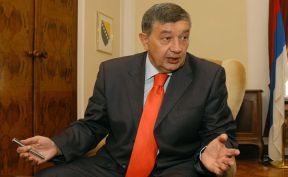
Izjavu predsjednika Ive Josipovića i premijerke Jadranke Kosor ja sam shvatio dobronamjerno: kao izjavu dvoje odgovornih funkcionera zemlje koja ima u svom Ustavu obavezu da vodi računa o Hrvatima van Hrvatske, i kao izjavu lidera koji žele da se u našoj zemlji brzo konstituiše vlast i da u njoj budu ravnopravni i Hrvati, kaže za Novosti Nebojša Radmanović, predsjedavajući Predsjedništva BiH Nedavna posjeta članova Predsjedništva Bosne i Hercegovine Zagrebu i razgovori koje je obavio s predstavnicima Srba u Hrvatskoj, bili su prvi povod za razgovor s predsjedavajućim Predsjedništva BiH Nebojšom Radmanovićem. Drugi povod bile su dileme oko konstituiranja Savjeta ministara BiH do čega nije došlo ni četiri mjeseca nakon izbora,

THE GENESIS AND OUTPUT OF THE CRIME

was thinking for a long time how to start this book and what to put between its bindings. Happenings which this book should be consisted of are so different in details that it wasn’t easy to reduce them to the common factor so that they would make a circle entirety. There was a dilemma how to single out, from the abundant material that is offered, those contents that would credibly present the real personalities and their destinies, burdened by the vulnerable chilhood. Their moving stories should bear witnesses to the time and people who marked that time with their blood and Serbian children’s tears and tortures that found themselves in

drakulic-2011.jpg

Pomen žrtvama ustaškog pokolja u Drakuliću

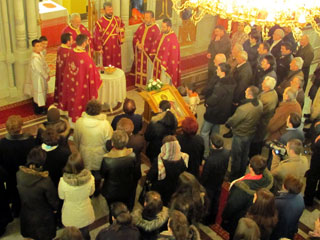
Nedjelja, 6. februar 2011. – U spomen hramu Svetog velikomučenika Georgija u Drakuliću kod Banjaluke jutros je služena liturgija, dok će u podne kod Spomen-kosturnice u Drakuliću biti služen parastos u znak sjećanja na više od 2 300 Srba koje su ustaše ubile 7. februara 1942. godine. Nakon liturgije, gradonačelnik Banjaluke Dragoljub Davidović rekao je novinarima da se ovaj najstravičniji zločin počinjen na području Banjaluke ne smije zaboraviti, ne da bi se na zlo vraćalo zlim, već da se pamti kako nikada ne bi bio ponovljen jer, kako je naveo, onom koji ne poznaje svoju prošlost prijeti opasnost da mu se ponovi. Predsjednik Organizacije porodica zarobljenih i poginulih boraca i nestalih civila

130.jpg

Smišljeni zločin sa genocidnom namjerom

BANjALUKA – U znak sjećanja na više od 2.300 Srba koje su ustaše ubile 7. februara 1942. godine juče su u hramu Svetog velikomučenika Georgija i na spomen-kosturnici u Drakuliću u Banjaluci služeni liturgija i parastos, te položeni vijenci i cvijeće. Žrtve su pobijene u banjalučkim mjesnim zajednicama Drakulić, Šargovac, Motike i u rudniku Rakovac. U ovom zločinu ustaše su, pod komandom Ante Pavelića, iz takozvanog „Tjelesnog zdruga“, uz pomoć banjalučkih ustaša, pobile Srbe bez ijednog ispaljenog metka, sjekirama, noževima krampovima i „srbomlatom“. Među žrtvama je bilo i 551 dijete. Potpredsjednik Vlade RS Anton Kasipović izjavio je da se obilježavanju zločina nad Srbima u Drakuliću mora poklanjati dužna pažnja jer

Gojko Knežević

Rođen 22. 12. 1934. godine u selu Ušivac, kod Knežice, opština Kozarska Dubica, živi u Banjoj Luci Svjedoči: Sjećam se seoske kozaračke kuće u kojoj sam rođen. Imao sam 1942. godine osmoro bra­će, majku i oca. Idiličan seoski život i naše dje­čije igre prekinuo je poziv na opšte bježanje, jer, neke ustaše pale sela i ubijaju narod. Na brzinu je majka spakovala šta je mogla i zaje­dno sa ostalim seljanima i sa nama uputila se u zbjeg na planinu Kozara. Na Kozari sam prvi put shvatio da ljudi ginu od nekakvih metaka i granata, što ja prije toga nisam nigdje čuo ni vi­dio. Lutali smo po Kozari sa ciljem da

NAJNOVIJE VIJESTI

Popis
10.502 žrtve

Udruženje Jadovno 1941. je formiralo Centralnu bazu žrtava, koju možete pretražiti unosom pojedinih podataka o žrtvama.

Kalendar
Pokolja

Odaberite godinu ili mjesec i pretražite sve događaje koji su se desili u tom periodu.