

 Serbian
 Armenian
 Croatian
 Dutch
Dutch English
 French
 German
 Greek
Greek Hebrew
 Hungarian
 Italian
 Norwegian
 Polish
 Russian
 Slovenian
 Spanish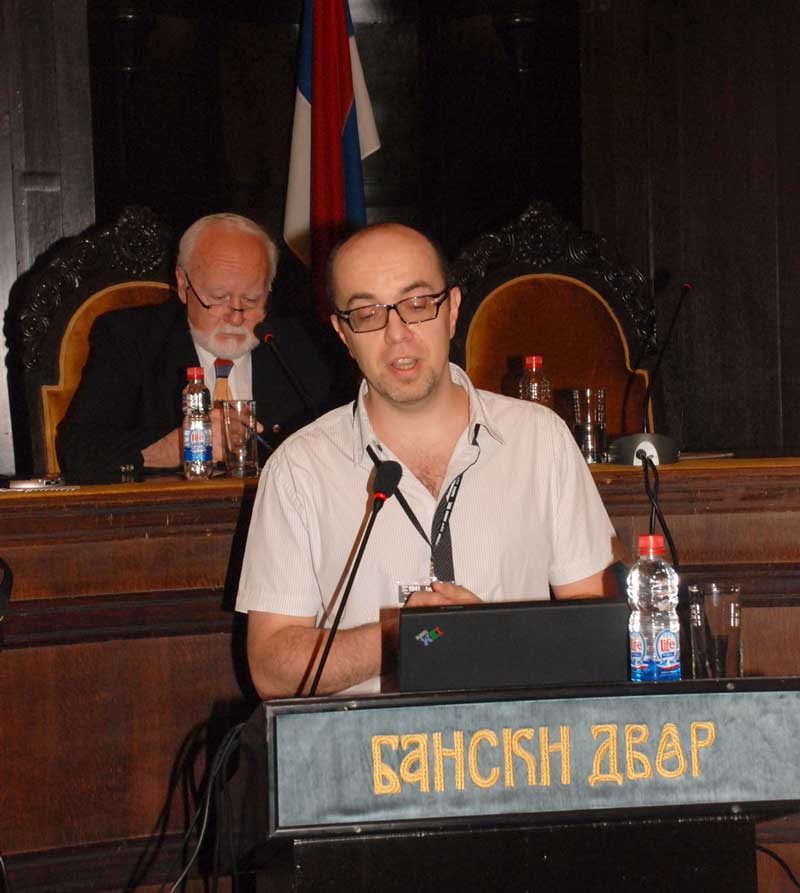
Kiril Feferman
Russian Holocaust Center, Moscow
NAZI “DIVIDE ET IMPERA”: COMPARING SOVIET AND YUGOSLAV CASES IN 1941
This paper seeks to elucidate similarities and dissimilarities between Nazi Germany’s policies vs. Yugoslavia and Soviet Union after these territories fell under German rule. Her policies reflected, to some extent a classical colonial approach of “divide et impera” and involved different treatment of various national groups comprising multinational states. However, the Germans considerably radicalized these policies with regard to non-Jewish population of Yugoslavia and USSR, which came largely as a result of the lifting of restrains on Nazi treatment of civilians and partisans. In both countries, German authorities suppressed the biggest nation (Serbs and Russians). At the same time, they gave favorable treatment to numerically weaker groups (Croats, Bosnian Muslims, Ukrainians, Baltic nations, etc.), their privileges being extended from independence to autonomy. Within German-dominated Europe the Germans gave a free hand given to their allies in solving their own agenda, as long it did not contradict German designs. But there was also a price these nations had to pay for the entrance to “new Europe”: absolute adherence to Nazi Judenpolitik (if they did it enthusiastically at their own will they Germans only welcomed it).
Along these lines, the paper will also look into dissimilarities between actual conditions in German-dominated Yugoslavia and occupied Soviet
territories in 1941. Suffice it to mention two factors. 1) Against the USSR Nazi Germany waged a “war of extermination” with the beginning of the “Final Solution” policy ascribed to loosely formulated orders, which identified Soviet Jews with the Reich’s mortal enemies. In Yugoslavia the extermination of Jews took on a shape of a military operation conducted by German military for tactical reasons, arguably, without receiving a prior “licence to kill all Jews” from Berlin. 2. In addition to Germany, which was the main occupation power in Yugoslavia and the Soviet Union, other Axis countries participated in the occupation and were involved in the Holocaust (Italy, Bulgaria, Hungary in Yugoslavia; Romania, Hungary, and Finland in the USSR). Of particular importance is the role played by the second most important German partners with their own occupation zones, Italy in Yugoslavia, and Romania in the USSR. The conduct of Italian and Romanian troops vis-à-vis general and Jewish populations in Yugoslavia and Soviet Union was different and took note of internal and foreign policies of these countries, as well as their war interests.


