arrow up
Ж | Ž
Ж | Ž
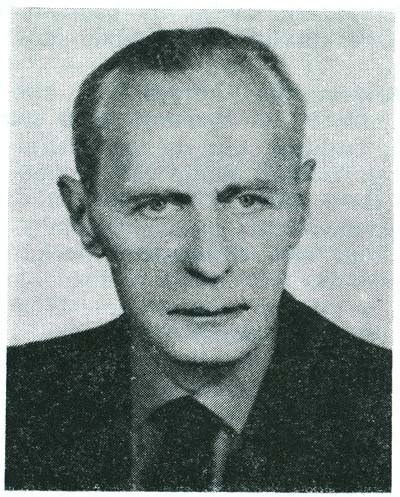
Dr OTO RADAN

Dr. Oto Radan, witness who survived Slana camp

While searching for material evidence, not loosing hope that someone has survived the hardship, I heard, through late author Marijan Matković, about an old and remarkable man, and I could see he was remarkable as soon as I laid my eyes on him. SERBIAN Lawyer Oto Radan, now retired, met me at his humbler flat in Zagreb with a dachshund dog next to his feet. While rummaging through the SLANA hell and getting to know its cruelty, it becomes quite unbelievable to meet such a calm and quiet man who manages to talk with an academic dignity about everything he has been through! And he did survive SLANA from the
Doubt everywhere

By comparing Ustashas’ confessions, statements from witnesses and other evidence concerning transportation of people from and to Velebit, it seems very clear that Ustashas were asking themselves: where to place these people and where to kill them, on Pag or on Velebit? How else we could explain why Ustashas moved the killing sites? Remember, they brought to the island people from Velebit, from Gospić or Jadovno, where the killings were a constant, and then they took some groups (how many?) from Pag and sent them to Velebit, where all of them were killed, whether next to the sea, on Oštrije, on the road to Jadovno and in Jadovno itself, or

Testimony and visit to Slana by Josip Balaž – Joža

On the following pages we are going to read the testimony of Josip Balaž, Joža, a Hungarian, now retired living in Daruvar. In his written statement from October 9, 1970, which is located in SUBNOR in Pag, comrade Balaž writes that he was born in 1912 in Goveđe Polje, Daruvar Municipality. At age of six he lost both of his parents. His father died in the First World War, while his mother, brother and sister died of Spanish flu. Later on Joža was working for villagers watching over their gees and pigs, and later on also their cattle. For this he was given some food and allowed to sleep in

Tape recording of a conversation with comrade Josip Balaž, a surviving inmate from Slana camp on the island of Pag

The conversation was held in the offices of the Municipal Board of SUBNOR, in Pag, on October 9, 1979. Present were: Nikola Bistričić, President of Pag SUBNOR, Srećko Jeličić, Secretary of Pag SUBNOR, Slavko Maržić, President of Pag UBNOR and Professor Ante Zemljar. Before the conversation started comrade Josip Blaž presented a document granting him benefits for his service from June 6, 1941 to May 15, 1945. He also presented documents showing that he had been an active in trade unions from 1932 and a member of the Communist Party of Yugoslavia from 1937, and presented newspapers from that period writing about workers’ strikes. From these documents we could see

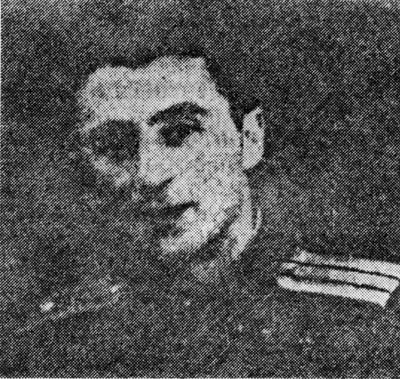
Testimony of Nada Feuereisen

After one part of her life, which you can only see in your worst nightmare, and during which she lost her husband and a five-year-old girl, after going through different camp and countless fights that seemed far from reality, the witness got to Italy into a Partisan base. Here she gave her statement to Captain Katalinić on September 8, 1945 in the office of the Section 5 of the Base Command (Rijeka Archives, SLANA, 8/1, 2, 3). Her accurate and clear statement caused me a lot of headache. When I compared her statement to Dr. Radan’s I came across a lot of unclear issues that I could not surmount easily.

Excerpts from the statement given by witness Nada Feureisen on September 8, 1944 in the office

“My name is Nada Feureissen, born in Zagreb, maiden name Cernik-Čavle, married, mother of two, now living in Bari, Via Dante Aligieri 270/III k. On July 9, 1941 in Zagreb I was arrested by the Ustasha security service. At the same time my husband and my four-and-a-half-year-old child were also arrested. Police officers who came for us left my old mother at home because I gave them some money. We were held in Zagreb Assembly for 4 days. The head of the camp in the Assembly was Ustasha official Baraković, the head of the Jewish section. There were also several Ustashas in the camp who molested us, but I do

My buried hopes

It is very strange, among other things, when for example Nada Feureissen says: “From Metajna we went to Slana on trabaccolo cargo ships. After that we boarded a sail ship and after half an hour reached a bay…” (Slana, Suha bay). For people who know this distance, it is clear that this is probably poor memory, because if you board a ship heading to Slana, it is unnecessary to change vessels since it is not a long distance. It is more interesting that she said they went into trabaccolo ships, so more than one. But if they changed vessels (from trabaccolos to a sail ship, although the trabaccolo is also

Eyewitness Radomir Vidas

Radomir Vidas from Novalja on Pag as a witness gave the following statement in the Pag Town Command in 1945: “In July 1941 I was on my way home for a leave as a Domobran (soldier of the territorial army). From Otočac I went to Pag via Gospić. I wanted to travel to Karlobag in a post bus. Since the bus was not scheduled for that day I had to find another transport. While I was looking for transport I found out that an Ustasha truck is transporting prisoner to a camp on Pag. Several days before I found out there was a camp on Pag, but I had never

pavao_levkovic.jpg

Testimony of Zlatko Vajler

Zlatko Vajler   While I was collecting testimonies about Slana camp, I rejoiced every time I heard that someone came out of Slana alive. It seemed that not all was black in this deepening pit in the soil of my ancestors’ island. I was grateful to the unknown force that still did something good in its attempt to save man. Reluctant, I rang the door bell of Zlatko Vajler’s flat in Belgrade, trying not to disturb this man, who to me seemed resurrected! When he opened the door I realised: only such vigorous and solid man could have survived and escaped! I am grateful for his encouragement which made me

emerik_blum_energoinvest.jpg

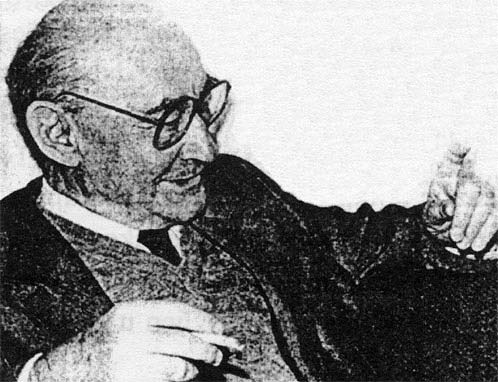
The Director of Sarajevo “ENERGOINVEST” witness of Slana

One of the distinguished business men is the witness that even deportees from Sarajevo came to Slana. For years he never mentioned that he had gone through the hell of this camp, not even to the people close to him. Today he is also deceased. He gave his short statement on his road to Slana on the request of Oren Ružić, a former Partisan from Pag who studied the history of Slana. Emerik Blum Emerik Blum: “I was arrested in Sarajevo on June 23, 1941 as a communist. We were held in a prison in Sarajevo for a month. After that we were lined up in columns and sent to

Going through documents

Rijeka Archives and Croatia Archives in Zagreb I wanted to title this section YELLOW LEAVES OF DOCUMENTS, but something led me to name it: golden documents. Both of them would be suitable as I see it. It is difficult to keep a cool head when we read in them about all the horror. But it is necessary to keep a cool head, more then anything in order to rummage through the piles of (seemingly) unnecessary things and dig out the solid truth. All of the documents that we came across were mostly written several years after the crime. All of the witnesses were registered either by the Commission (or commissions)

20-01.jpg

County War Crimes Commission for Croatian Coast

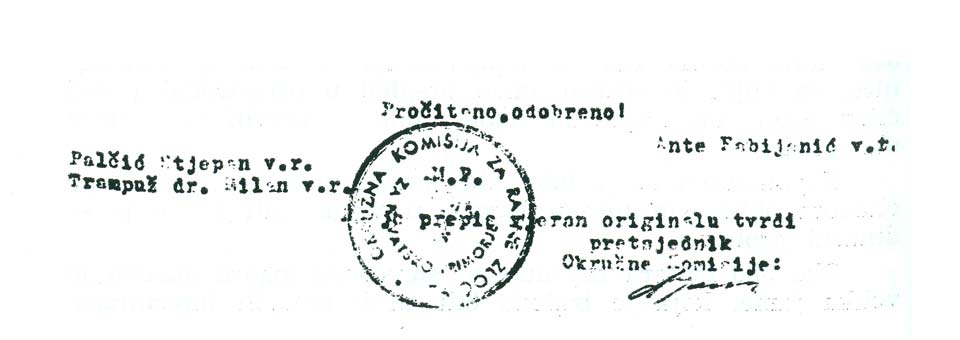
On regular field work in Pag RECORD on interviewing witnesses in the case Slana and Metajna. Made on November 20, 1945 in Pag Present: Dr. Stjepan Petek Recorder: Stjepan Palčić Witness: Duje Bilić, age 36, Roman Catholic, Croat, Manager of Pag Harbour Office, married, father of four, warned to speak the truth, states: “In autumn 1941, immediately after the camp was disbanded I took my boat accompanied by Jure Persen, Dr. Tomo Dodoja, Ivan Sabalić and Jerolim Bukša and went to Slana camp. Our intention was to save any inmates that might had been left there, so we took guns with us in case someone tried to stop us. Just

Reading the order to the ship operator again

The date on the order to get “sand”, June 20, 1941 shows us that the coordination between Pag and Zagreb, i.e. between local Ustashas and those in the capital, was excellent. As we said before, the Jews in Zagreb were arrested on June 21 and brought to Slana on June 24. Oguić had sent the ship to get “sand” three days before. Don’t be surprised because I mention these dates several times. These dates and activities that happened before the Jews in Zagreb were arrested tell us that this was an organised activity of the Ustasha headquarters in Pag, going forward full power while hiding it from the people who

Read clearly

There is one question to which Canon J. Felicinović answered, although vaguely. If you read “Personal Memories” on page 4 you can read about the arrest of Janko Rausavljević and Lazo Rakić (clerks from Pag) where you can find out that Felicinović had to renounce his superior and young associate, the Camp Commander of the Ustasha Headquarters in Pag. I quote: “In the town of Pag lived Martin Rudelić from Brašani near Gospić who worked as a post office clerk. On July 1, 1941 he illegally and without a cause arrested customs officer Janko Rausavljević and Lazo Rakić who were Orthodox Christians. He found a ship on which he planned

23-01.jpg

Original documents of Italian military medical service

Searching for more reliable documents on Slana as well as photographs (because those photos that we have suggest there are more of them, even from the execution sites) I went to the Ministry of Defence of the Republic of Italy. I asked them for a copy of a case file from their archives with a number that I had. Through our Embassy in Rome I received a reply from the Ministry of Defence number 35722 from July 10, 1987, in which the Head of the Office informed me that he unfortunately could not provide me with the photographs which had been lost in the chaos of war, but that he

NAJNOVIJE VIJESTI

Popis
10.502 žrtve

Udruženje Jadovno 1941. je formiralo Centralnu bazu žrtava, koju možete pretražiti unosom pojedinih podataka o žrtvama.

Kalendar
Pokolja

Odaberite godinu ili mjesec i pretražite sve događaje koji su se desili u tom periodu.